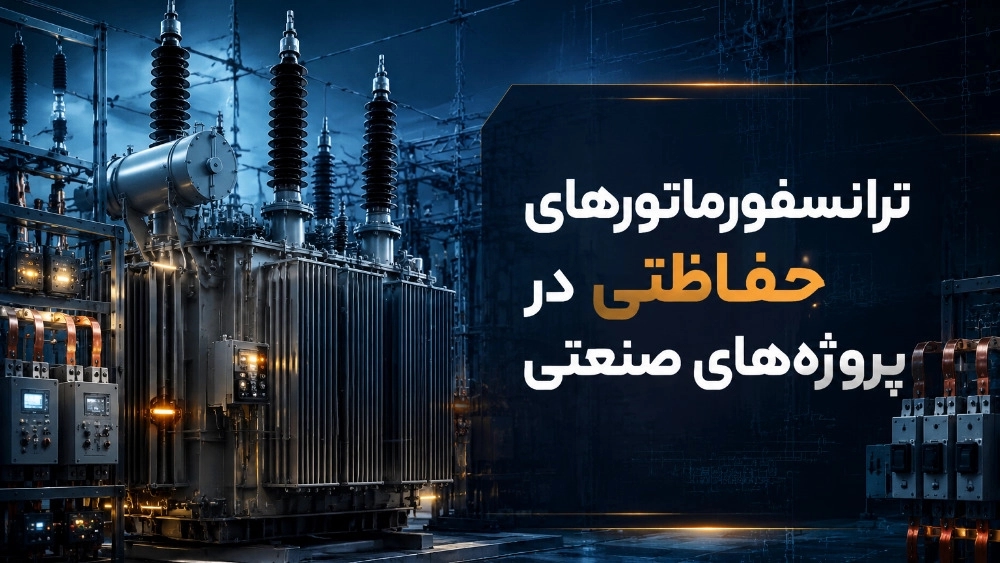
What is a protection transformer?
The importance of protection transformers in industrial projects
- Increasing the safety of employees and equipment
- Reducing the possibility of damage to machinery
- Preventing the spread of faults in the network
- Reducing the downtime of production lines
- Improving the reliability of the power system
- Increasing the accuracy of protective relays operation
- Facilitating monitoring and analysis of the network condition
- Establishing electrical isolation between the power circuit and the control circuit
Types of protection transformers
Protection current transformer
Protection voltage transformer
Toroidal current transformer
Corbalance current transformer
The difference between protection and measurement transformer
The most important technical specifications of protection transformers
Protection accuracy class
Rated power and secondary load
Accuracy limit coefficient
Application of protection transformers in different industries
Oil, gas and petrochemical industries
Steel and mining industries
Power plants and substations
Data centers and sensitive infrastructure
Saturation in protective current transformers
Installation and wiring principles
- Checking the direction of polarity before connection
- Connecting the ground of the secondary circuit at the right point
- Preventing the creation of multiple unwanted ground connection points
- Using a cable with a calculated cross section
- Separating the protection and control circuits
- Recording the number of the terminals according to the map
- Controlling the strength of the connections
- Complying with safety requirements during testing
- Preventing Leaving the CT secondary circuit
- matching the implemented wiring with the final drawing
Testing and commissioning of protection transformers
- Transformation ratio measurement
- Polarity check
- Winding resistance measurement
- Insulation resistance check
- Excitation curve check
- Determining the knee point in necessary applications
- Secondary circuit continuity test
- Control of the actual load connected to the secondary
- Relay function test and circuit breaker
- Check Compliance with executive plans
Periodic maintenance and monitoring
Common errors in selection and operation
- Choosing inappropriate conversion ratio
- Ignoring motor starting current
- Not calculating secondary cable resistance
- Using inappropriate accuracy class
- Incorrect polarity direction
- Opening CT secondary circuit
- Creating multiple ground connections in secondary circuit
- Not matching CT specification with digital relay
- Ignoring conditions temperature, humidity and pollution
- not performing pre-operational tests
Selection criteria for specialized suppliers
The role of Sohail Farjam Energy in industrial projects
- Selection of equipment according to the type of protection
- Technical review of the conversion ratio and accuracy class
- Attention to the actual conditions of operation
- Coordination of primary and secondary equipment
- Reduction of errors caused by unprincipled selection
- Providing technical documentation required for the project
- Specialized support in the supply and implementation process
- Helping to increase the reliability of the network
Standards and technical documentation
The effect of correct design on network stability